






On India’s independence day, India-Nepal relationship revisited

Nepal India Relation : ‘Kabhi Khusi, Kabhi Gam’
When mentioning about the relationship between Nepal and India, the first phrase that comes to mind is ‘Roti Beti Ka ‘ relation. If you don’t look at it under the veil of so-called nationalism, the relationship between Nepal and India is really special. There is no border in the relationship between the two countries, especially for the residents of the Terai border of Nepal as well as for the far eastern and far western mountain people.
India is the market for border Nepalis to buy affordable daily bread and butter, while Nepal is the market for Indians to buy affordable Chinese clothes. And the daughters of both countries are married across the border specially in boarding areas. Going across to visit there material home is normal for daughter of both sides. So, there is a relation of Bread and Beti. But why do Nepalis distrust India?
Nepal’s prosperity depends on India’s support. We should not shy to tell this truth. If Nepal dreams of development and increased production in Nepal, India would be an obvious market.
One of the reasons for this is India’s ‘big brother’ behavior. Even the rights of land-locked country Nepal are treated as benefaction granted. There is a common belief among Indians that Nepal is a very poor country, Nepal cannot stand without the help of India. Nepal needs India, there is truth in it. However, the statement Nepal could not stand without India, is not true.
Nepal’s prosperity depends on India’s support. We should not shy to tell this truth. If Nepal dreams of development and increased production in Nepal, India would be an obvious market. Nepal’s dream of becoming prosperous by selling electricity would not be possible without India.
It is absolutely not wrong to raise your voice for the land of the country. The dispute over the source of the river Kali (Mahakali) is not new. India has control on land of Nabi, Gunji and Kuti since the time of the British. But Nepal has never given up its claim.
Bangladesh, the third country closest to Nepal, also needs India’s route to buy electricity from Nepal. Another nearby country, Bhutan, is self-sufficient in electricity and is selling electricity to India. Bangladesh is also not far from Bhutan’s vision. If you want to prosper by selling electricity, India is the market for Nepal. Buyers do have conditions, the buyer in the market looks for the cheapest and the best. The market price depends on how much the seller can resists in its price and what is the immediate need of the buyer. Pseudo-nationalism does not work for country’s interests. It can only serve politics.
It is absolutely not wrong to raise your voice for the land of the country. The dispute over the source of the river Kali (Mahakali) is not new. India has control on land of Nabi, Gunji and Kuti since the time of the British. But Nepal has never given up its claim.
According to the claims made by Nepal after the Sugauli Treaty, the recently released map of Nepal is natural. According to the provisions of the Sugauli Treaty, even if the actual flow of the Kali River is to be seen, the map of Nepal should always be like recently released map. Whoever owns the land in those three villages of Byas region, Nepal always should have maintained those territory in the map issued by country, as the land was always claimed by Nepal to its part. Just as China, India and Pakistan have been showing the disputed land of Kashmir on their respective maps.
And the ‘Kalapani’ is always the part of Nepal even considering the flow of Kali River which is acknowledged by India. Therefore, Nepal’s claim for ‘Kalapani’ is robust. There are land disputes in different other places in the border as well. Unresolved land dispute is one of the “Gam” aspects of India-Nepal relations.
India also has its own interests. The relationship with Nepal is also not without interest. India wants to see Nepal under its security umbrella. Especially Nepal’s proximity to China is not acceptable for India.
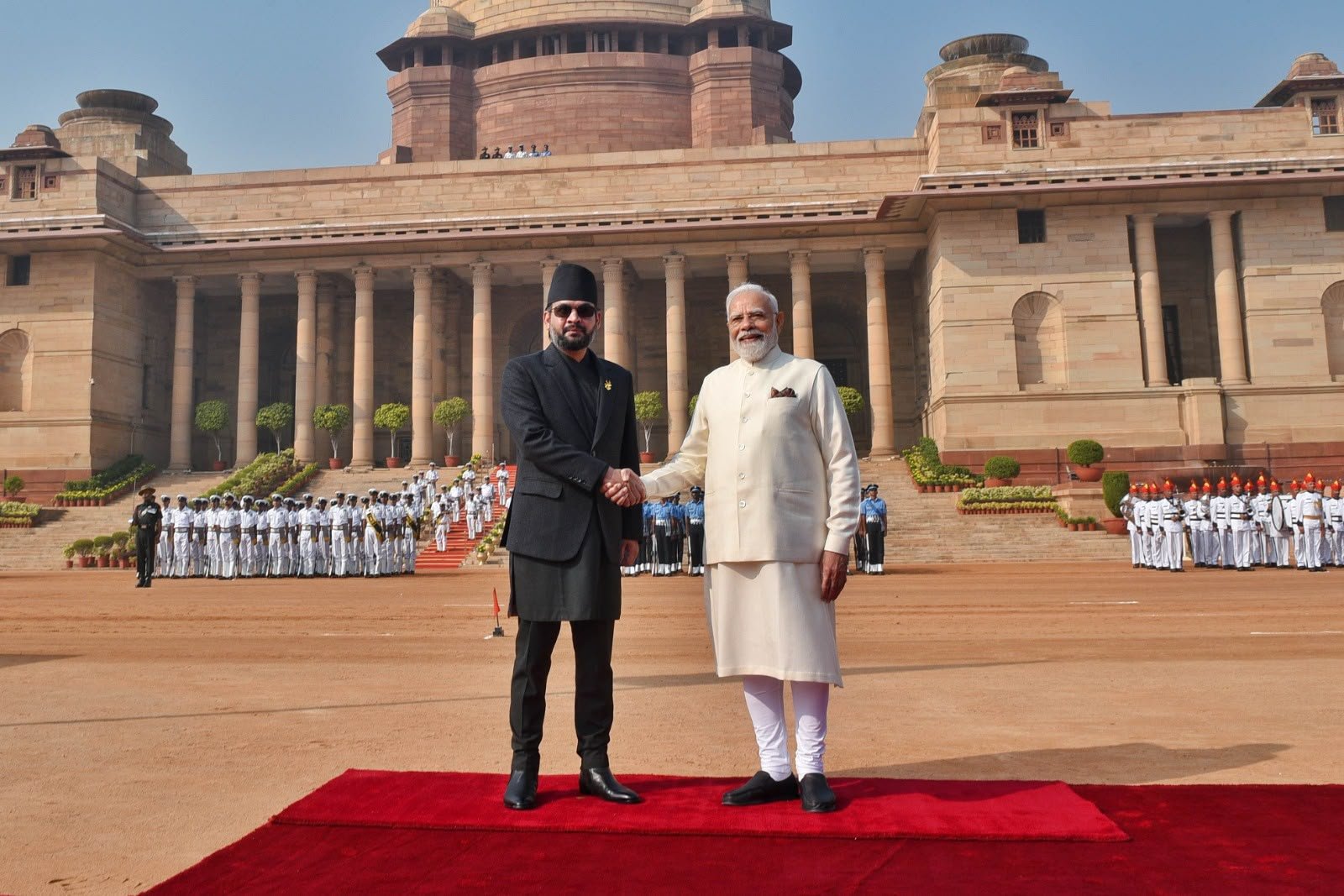
The ‘Khushi’ side is India standing for Nepal in most cases of trouble. Whether it is to lend hand of support during the earthquake or to help in the economic development of Nepal, India has been there. India is undoubtedly one of the countries that provide the most financial support to Nepal. And India, which has the largest population in the world, is also a market for the economic prosperity of Nepal. India is also a growing economic power in the world. As well as military power.
India also has its own interests. The relationship with Nepal is also not without interest. India wants to see Nepal under its security umbrella. Especially Nepal’s proximity to China is not acceptable for India. India is always suspicious of Nepal’s relationship with China. India has understood that India is necessary for Nepal’s economic development rather than China, which is located on a geographically difficult border. Therefore, India wants to take advantage of Nepal’s forced situation. This forced situation is also the misfortune of Nepal.
This unfortunate situation sometimes makes some leaders surrender. That is why some leaders refer to the Monroe Doctrine and advocate that we should be silent supporters of India’s regional interests. The current world order is not ready to accept the concept of someone living under someone else’s security umbrella. After the collapse of the Warsaw Pact, most of the countries in the world are not out of the US interest. India also wants to become a regional power without hurting American interests. For that, India wants South Asia to remain its sphere of influence and the countries of this region should not go against its interests.
There is a strong opinion within India that India’s interests will be served only if India treats the South Asian countries as a friendly, selfless and understanding friend. Scholars in India agree that, it will harm India if it wants to behave countries in South Asia like a big brother.
It is natural that India wants South Asian countries not to go against its interests. In current world order and context of diverse relationship of a country India’s desire for these countries to work for its benefit cannot be completely accepted. Now all the countries of the world are free to work for the interests of their own without damaging the interests of other countries. There is no such thing as during the time of the Monroe Doctrine, when the power nations divide the countries of the world as their sphere of influence.
There is a strong opinion within India that India’s interests will be served only if India treats the South Asian countries as a friendly, selfless and understanding friend. Scholars in India agree that, it will harm India if it wants to behave countries in South Asia like a big brother. This is also reflected in the speech of the top leadership of India from time to time. But the behavior is often different. That is why not only Nepal but also other countries of South Asia have expressed their doubts over India time and again.
If you want to read in Nepali : https://instakhabar.com/news/22717/