


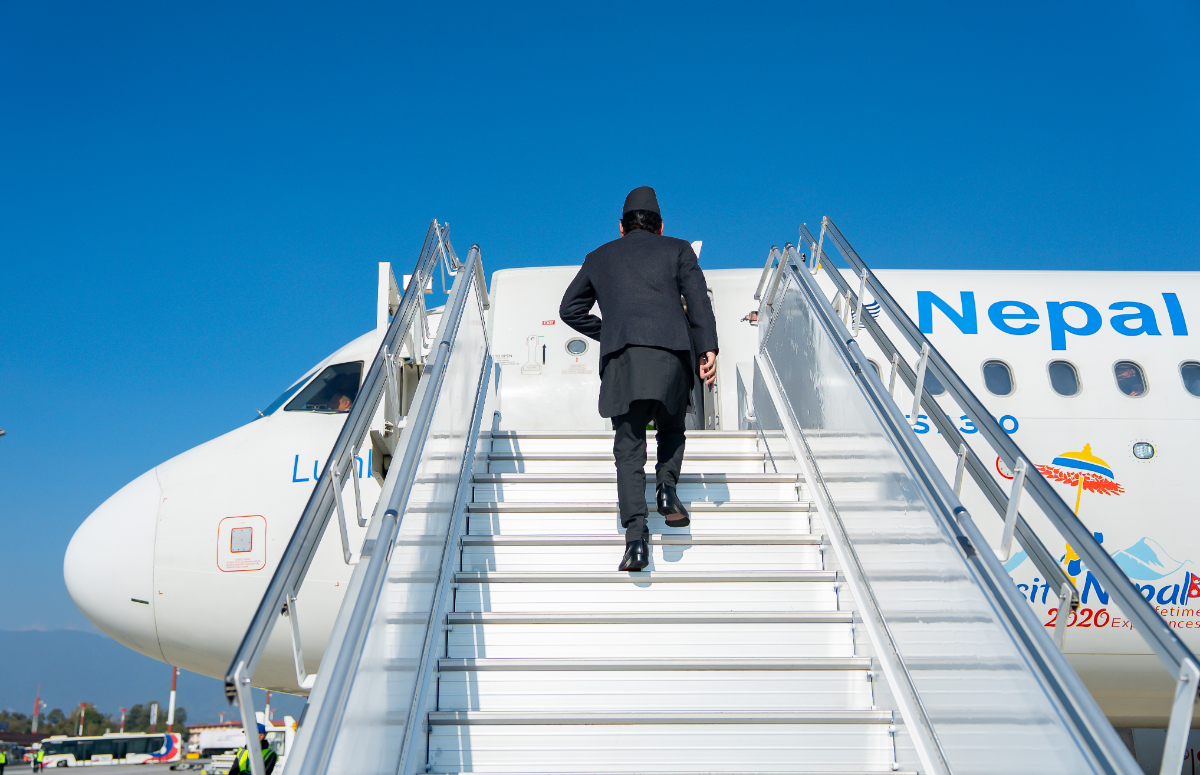


PM Balen Shah returns home after two-day state visit to India; eight MoUs signed, major connectivity & development packages announced

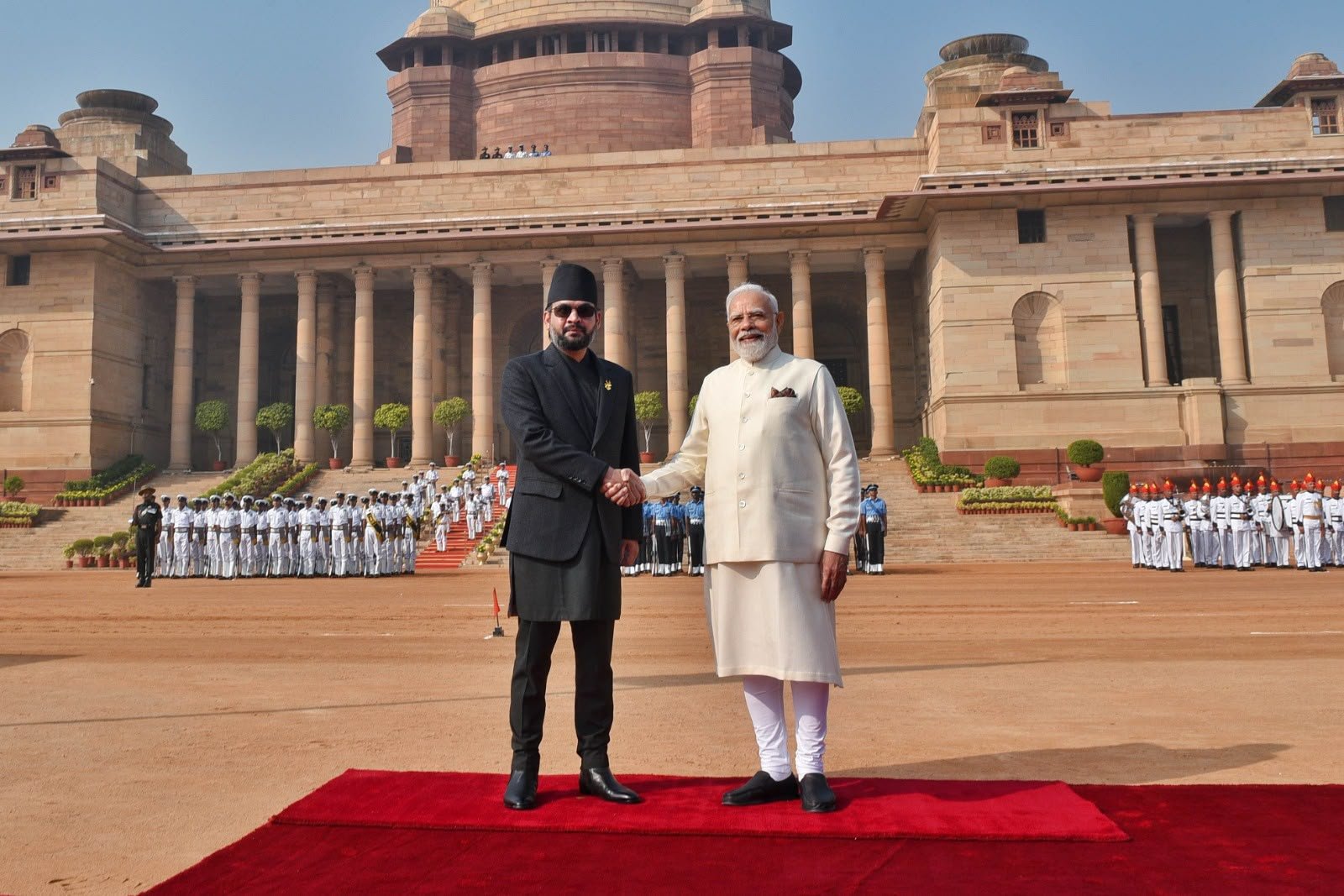
KATHMANDU — Prime Minister Balendra Shah (Balen) returned to Kathmandu on Monday evening, concluding his two-day official state visit to India—his first bilateral foreign trip since assuming office.
Arriving at Tribhuvan International Airport after being seen off in New Delhi by Indian Minister of State for Commerce and Industry Jitin Prasada, Shah wrapped up a high-level diplomatic tour marked by the signing of eight Memoranda of Understanding (MoUs), new cross-border connectivity launches, and a fresh economic vision between the two neighbors.

Key High-Level Engagements
During the November 22–23 visit undertaken at the invitation of Indian Prime Minister Narendra Modi, Shah participated in a series of formal ceremonies and bilateral talks:
-
Ceremonial Welcome: On Monday morning, Shah was accorded a formal Guard of Honour at Rashtrapati Bhavan in the presence of PM Modi, followed by a floral tribute at Mahatma Gandhi’s memorial at Rajghat.
-
Bilateral Talks: Shah and Modi held a one-on-one meeting followed by delegation-level talks at Hyderabad House. Nepal’s delegation included Finance Minister Dr. Swarnim Wagle, Foreign Minister Shishir Khanal, Chief Advisor Kumar Byanjankar, and Foreign Secretary Amrit Bahadur Rai.
-
Courtesy Calls: Shah called on Indian President Droupadi Murmu on Monday, after having met Indian External Affairs Minister Dr. S. Jaishankar on Sunday evening. Shah also formally invited PM Modi to visit Nepal, which Modi accepted.
Major Announcements & Connectivity Milestones
Following their bilateral talks, the two prime ministers adopted the “Viksit Bharat and Samunnat Nepal” Joint Vision to guide future cooperation across economic growth, energy, climate resilience, and technology. Key outcomes announced include:
-
Development Package: India announced an NRs 240 billion development package for Nepal, alongside discussions on post-flood reconstruction following the Rasuwa–Bhotekoshi disaster.
-
Expanded Port Access: PM Modi announced a new transit trade avenue for Nepal through Deendayal Port in Kandla, Gujarat, with future access to Paradip Port in Odisha once requisite infrastructure is completed.
-
Rail & Border Infrastructure: The leaders inaugurated the weekly Ayodhya–Janakpurdham passenger rail service and a new cross-border motorable bridge connecting Dharchula (India) and Darchula (Nepal). They also virtually laid the foundation stone for a new Integrated Check Post (ICP) at Banbasa.
-
Ease of Services & Boundary Talks: Both governments agreed to facilitate smoother cross-border access to banking and telecom services for citizens residing in each other’s countries. The leaders also directed their Foreign Secretaries to continue work on resolving outstanding boundary issues.
Eight Bilateral Agreements Signed
Nepal and India exchanged eight MoUs spanning security, governance, healthcare, urban development, and agriculture:
-
Forensic Sciences: Academic and research collaboration between India’s National Forensic Sciences University (NFSU) and Nepal Police’s Crime Investigation Department.
-
Policing & Security: Partnership between Rashtriya Raksha University (RRU) and Nepal’s National Police Academy (NPA).
-
Civil Service Training: Capacity-building program between India’s National Centre for Good Governance (NCGG) and the Nepal Administrative Staff College.
-
Health & Medicine: Cooperation in healthcare services and medical sectors between the two health ministries.
-
Traditional Medicine: Government-to-government pact on Ayurveda and other traditional systems of medicine.
-
Livestock & Fisheries: Bilateral cooperation to promote livestock farming and fisheries development.
-
Urban Development: Technical cooperation for sustainable urban development.
-
Technology & Innovation: Expanded institutional and technical collaboration in digital infrastructure and emerging technologies.
According to diplomatic observers, the visit signaled a pragmatic shift toward economic execution and infrastructure delivery, though long-standing requests—such as additional air entry routes—remain under ongoing discussion.