






Historic Precedent in House of Representatives as Speaker Directs Prime Minister Balendra Shah to Address Parliament

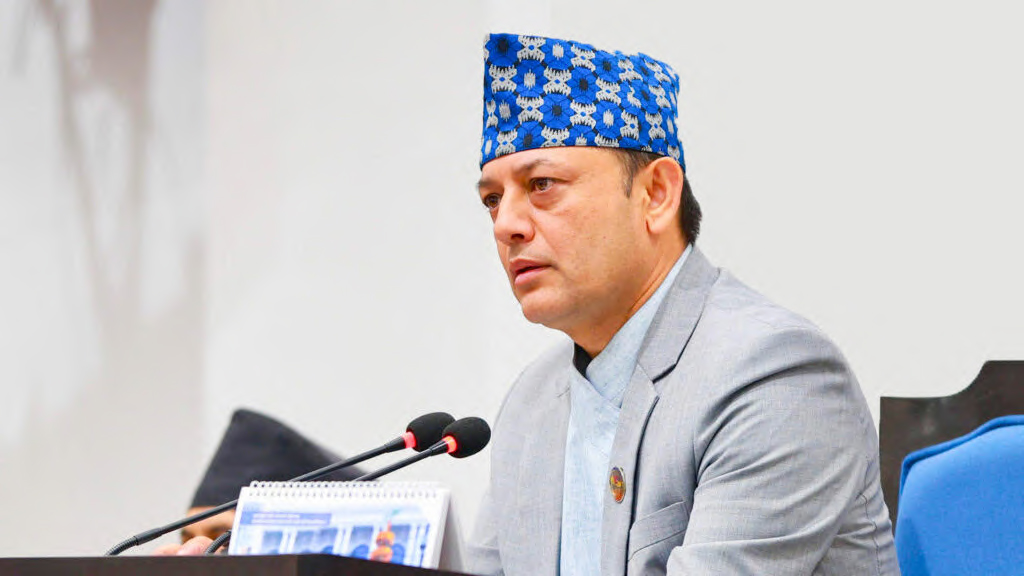
KATHMANDU — In an unprecedented move in Nepal’s legislative history, Speaker of the House of Representatives Dol Prasad Aryal issued a formal ruling instructing Prime Minister Balendra Shah to appear before Parliament and answer questions raised by lawmakers.
The historic directive marks the first time a Speaker of the House has issued a ruling specifically targeting a sitting Prime Minister, reinforcing legislative supremacy and executive accountability.
Following the ruling, Speaker Aryal also scheduled a direct Prime Ministerial Question and Answer session for August 26 (Bhadra 10) in accordance with the House Rules of Procedure.
Breakthrough Ends Months-Long Opposition Protests
The Speaker’s ruling immediately broke a prolonged parliamentary deadlock that had stalled legislative business since late May. Opposition parties—including the Nepali Congress, CPN-UML, CPN-Maoist Centre, Shram Sanskriti, and Rastriya Prajatantra Party—had been continuously disrupting proceedings for 78 days.
The impasse began on May 31 (Jeth 17), when Prime Minister Shah made a controversial statement during a legislative address, remarking, “After becoming Prime Minister, I found out that Nepal had also encroached upon India’s border.”
Viewing the remark as detrimental to national interest, opposition lawmakers demanded that the Prime Minister stand at the parliamentary rostrum to formally clarify and correct his statement. As the executive head repeatedly avoided addressing the floor, opposition disruptions escalated, leading to the boycott of discussions on government policies, programs, and key legislative bills.
Speaker Exercises Discretionary Power Under House Rules
The historic intervention occurred during Monday’s session when opposition MPs stood up to block proceedings as soon as the meeting commenced. Moving past initial appeals for lawmakers to take their seats, Speaker Aryal invoked parliamentary regulations to issue a formal directive.
“My attention has been drawn to the persistent demands of honorable members regarding critical matters under Rule 56 of the House of Representatives Regulations,” Speaker Aryal announced from the chair. “In this context, I hereby direct the Honorable Prime Minister to attend the meeting of the House of Representatives and answer the questions of the honorable members in accordance with Rules 56, 57, 58, 59, and 60.”
Following the Speaker’s explicit directive, protesting members resumed their seats, allowing the House to proceed with its regular agenda.
Prior Interventions and Executive Absence
The ruling came after multiple attempts by the Speaker to mediate the standoff informally. Sources within the Parliament Secretariat confirmed that Speaker Aryal had twice visited Prime Minister Shah at the Office of the Prime Minister and Council of Ministers in Singha Durbar, urging him to address the floor voluntarily. However, the Prime Minister had repeatedly demurred.
Records show that since assuming office on March 26 (Chaitra 13), Prime Minister Shah has maintained a distant posture toward formal parliamentary proceedings. He did not formally address the House during its first session in early April and frequently delegated cabinet ministers to present government bills and respond to policy debates. Following his May 31 statement, Prime Minister Shah attended the House briefly on July 14 alongside RSP Chair Rabi Lamichhane without speaking, and remained absent throughout the subsequent month.
Legal Experts and Opposition Welcome Precedent
The Speaker’s decision drew widespread praise from opposition leaders and parliamentary experts, who framed the ruling as a critical step toward safeguarding democratic checks and balances.
Nishkal Rai, Chief Whip of the main opposition Nepali Congress, welcomed the Speaker’s action: “For 78 consecutive days, we maintained serious objections to the Prime Minister’s statement at the rostrum. Today, the Speaker’s ruling directing him to clarify and respond is a highly commendable step that respects the dignity of the House.”
Former Parliament Secretariat General Surya Kiran Gurung described the ruling as a rare but necessary application of statutory authority. “This is the first time in Nepal’s parliamentary history that a ruling has been issued to a Prime Minister. Previously, no chief executive exhibited such reluctance to face the floor,” Gurung stated. “By stepping up, the Speaker has restored legislative dignity and reminded the entire cabinet of its constitutional accountability to Parliament.”
Former Secretariat Secretary Som Bahadur Thapa echoed those sentiments, noting that while it is regrettable an executive head required a formal mandate to attend Parliament, the ruling sets a vital precedent for future governance.