









Government Extends Financial Management Period for Large Hydropower Projects by Two Years

Kathmandu – The government has decided to extend the financial management period for large hydropower projects by two years. The Department of Electricity Development has amended the Electricity Project Licensing Directive 2075 to provide additional time for financial management of large-scale hydropower projects.
Considering the prolonged process of power purchase agreements (PPAs) and the time required to secure financing for large-scale projects, the department has introduced a provision to extend the financial management period by two years for projects with an installed capacity of more than 100 MW, informed Director General Navin Raj Singh.
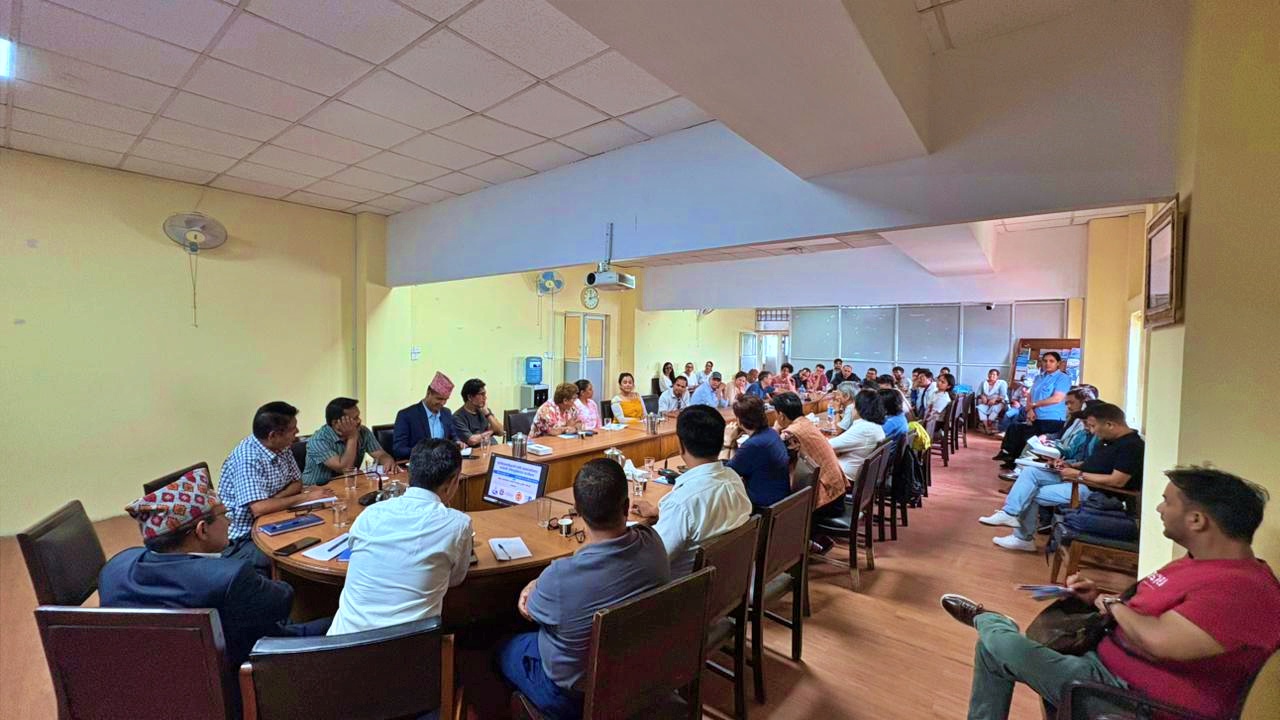
Earlier, Minister for Energy, Water Resources, and Irrigation, Deepak Khadka, had held discussions with power producers regarding the challenges faced in the construction of large hydropower projects.
Previously, the directive required developers to submit an industry registration certificate before amending the electricity generation license. However, under the revised provision, developers can now submit an industry registration letter of intent before license amendment and then submit the updated industry registration certificate within one year of the amendment. This change is expected to simplify the licensing process and provide ease to project developers.
Additionally, to protect the investments of banks and financial institutions funding hydropower projects, a new provision has been introduced allowing the transfer of electricity generation and transmission licenses to the highest bidder if the developer fails to repay the loan and the project is auctioned. This measure aims to mitigate financial risks for banks and financial institutions, Director General Singh stated.
Furthermore, the department has also amended the Grid-Connected Alternative Energy Development Procedure 2078. Now, while issuing survey and production licenses for solar power projects, the respective local authorities must provide a recommendation certifying that the designated land is suitable for solar energy development.
According to the department, this amendment empowers local governments to exercise their land-use authority while facilitating developers in obtaining land recommendations. Following this facilitation, survey licenses for 29 solar power projects with a combined installed capacity of approximately 483.5 MW have been issued. This initiative is expected to support the government’s goal of generating 28,500 MW of electricity by 2035.