




From Vietnam to the Holy Soil: Ascetic Monks Reach Lumbini Following 2,700-Kilometer Barefoot Journey

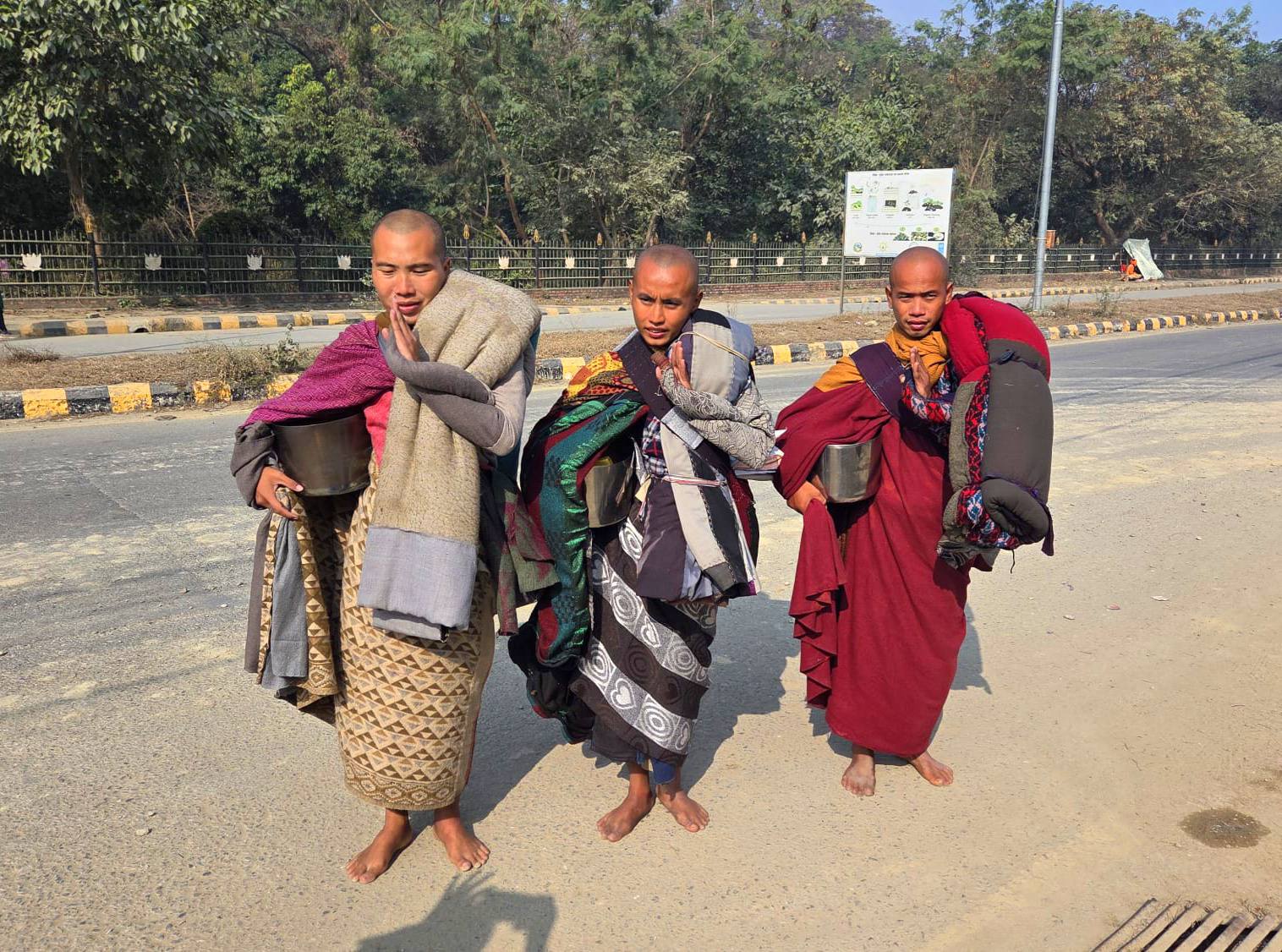
LUMBINI — The sacred birthplace of Gautam Buddha has become a final sanctuary for a group of approximately thirty Vietnamese monks who have completed an extraordinary spiritual odyssey across Asia. After traveling on foot through Laos, Thailand, and Malaysia, the monks crossed into India to visit the four major Buddhist shrines before finally arriving in Lumbini. Their presence has transformed the quiet perimeter of the Cambodian Monastery, where they are currently residing in the open air, into a site of profound spiritual witness.

These practitioners follow the rigorous Dhutanga ascetic code, a lifestyle that pushes the boundaries of human endurance to achieve spiritual liberation. Their journey is a modern echo of ancient Buddhist traditions, characterized by vows that reject almost all worldly comforts. One of the most striking sights for locals and pilgrims in Lumbini is the monks’ unique attire. Known as Chibber, their robes are hand-sewn from discarded pieces of cloth—often collected from charnel grounds or rags abandoned by the deceased—which are then cleaned and stitched together as a symbol of the impermanence of life.
The monks’ daily routine in Lumbini is a testament to their unwavering discipline. Each day, they circulate the Mayadevi Temple, performing meditative walks and prayers for world peace. Their asceticism is defined by several extreme rules that set them apart from traditional monastic orders:
-
Vow of No Sleep (Sitting Posture): None of the monks in this group sleep in a reclining position. Instead, they remain in a seated meditative posture throughout the night, often leaning against trees or walls when exhaustion takes over.
-
Renunciation of Shelter: Adhering to the Abbhokasika and Rukkhamula practices, they refuse to enter or sleep inside houses or buildings. Instead, they live in the jungles and open areas of the Lumbini garden, choosing the bare earth as their bed.
-
Total Rejection of Money: In a strict departure from modern practices, these monks do not accept offerings in cash. They rely solely on the traditional alms round for their single daily meal, accepting only food and water.
This pilgrimage, led by the renowned ascetic Thich Minh Tue, has captured the hearts of millions across social media and now across the plains of Nepal. By walking barefoot across entire nations to reach the Buddha’s birthplace, the monks have become living symbols of the Dhamma, demonstrating that the ancient path of renunciation is still alive in the 21st century.
As they roam the Lumbini area, their silent, barefoot march continues to serve as a powerful reminder of the Buddha’s original teachings: that true peace is found not in accumulation, but in the radical letting go of the self.
The 13 Pillars of Asceticism
In Lumbini, these monks are observed strictly adhering to the thirteen specific vows that define their path. These practices are categorized into four areas: robes, food, residence, and posture.
Robe Practices:
-
Paṃsukula: Wearing only abandoned robes or “rags” sewn together.
-
Tecivarika: Possessing and wearing only three robes at any time.
Food Practices:
-
Piṇḍapata: Eating only food collected in an alms bowl.
-
Sapadanacarika: Walking house-to-house for food without skipping any.
-
Ekasanika: Consuming only a single meal per day.
-
Pattapiṇḍika: Eating everything directly from the bowl, refusing plates.
-
Khalupacchabhattika: Refusing any extra food once the meal has begun.
Residence Practices:
-
Arannika: Residing exclusively in the forest.
-
Rukkhamula: Living beneath the shelter of trees.
-
Abbhokasika: Sleeping on the bare earth in the open air.
-
Susanika: Meditating and remaining among charnel grounds (cemeteries).
-
Yathasantatika: Accepting and sleeping in whatever spot is allotted.
The Posture of Effort:
-
Nesajjika: The most rigorous vow—renouncing the lying posture entirely, even during sleep, and remaining only in sitting, standing, or walking positions.
A Journey for Global Peace
The presence of the Vietnamese monks has drawn significant attention from both local pilgrims and international tourists in Lumbini. Their journey, often spanning thousands of kilometers across borders, is viewed as a living embodiment of the Dhamma.
“To see them practicing the same austerities that were described 2,500 years ago, right here at the Buddha’s birthplace, is a powerful reminder of the core of our spiritual heritage,” said a local visitor at the Maya Devi Temple.
As they move through the Lumbini garden, their silent, meditative presence serves as a prayer for harmony. For these monks, the physical hardship of the Dhutanga path is not a punishment, but a “spiritual cleansing” intended to tame the mind and eradicate greed, anger, and delusion.